


Performance depends primarily on air temperature, relative humidity, and wet-bulb temperature, which represents the theoretical cooling limit that can be achieved. Altitude, thermal variations throughout the year, and surrounding obstructions also affect efficiency.
Read all FaqEvaporative Cooling Systems
Do you want performance and efficiency for your industrial cooling system? Then the cooling towers and evaporative condensers ensure both in an extraordinarily simple way. Innovative technical measures reduce water consumption and noise levels.
Evaporative Cooling: Frequently Asked Questions and Expert Answers
An evaporative condenser condenses the refrigerant gas inside coils that are wetted by sprayed water and cooled by an airflow. According to the evaporative cooling principle, when a small portion of water evaporates, heat is dissipated and the refrigerant condenses.
Read all FaqBoth open-circuit and closed-circuit towers exploit a very efficient operating principle: forced evaporation of a minimum amount of water causes a lowering of the temperature of the main water mass.
Read all FaqIn direct evaporative cooling (open-circuit evaporative tower), the process water to be cooled is introduced into the tower and comes into direct contact with the outside air. The water evaporates directly into the air, removing heat and lowering its temperature — leveraging a simple natural principle: the forced evaporation of a small amount of water causes a temperature drop in the main water mass.
Read all FaqLes condenseurs évaporatifs fonctionnent de la même manière que les tours de refroidissement en circuit fermé. La seule différence réside dans le fluide de traitement, qui est un gaz réfrigérant.
Read all FaqWet cooling towers are known for their high energy and thermal efficiency, making them an ideal solution for dissipating excess heat in air-conditioning systems and industrial processes. Thanks to the principle of evaporative cooling, these technologies can achieve very low cooling temperatures while using minimal electrical energy and water. In many applications, these lower temperatures allow the overall system to operate with reduced power consumption, directly contributing to energy savings and a lower environmental impact.
Read all FaqAll evaporative cooling systems use the evaporation of a small amount of water to lower the temperature of the larger mass of water. There are three main types of evaporative cooling systems: open circuit cooling towers, closed circuit cooling towers, and evaporative condensers.
Read all FaqAmbient air is the heat-transfer medium that enables water evaporation and thermal exchange. Its temperature and relative humidity determine the efficiency of the process: under dry-air conditions, the evaporative effect is at its maximum.
Read all FaqBoth systems use water, but in different amounts, in different ways, and with different levels of efficiency. The direct evaporative
Read all FaqIn summary: high cooling efficiency, low operating costs, and others related to the operation of the technology.
Read all FaqModern evaporative coolers use automatic blowdown systems controlled by conductivity sensors, partial recovery of discharge water, and optimized make-up strategies. Adiabatic systems, on the other hand—with the proper use of sensors and PLC-based parameter settings—use water only during periods of maximum thermal load, reducing overall consumption compared to traditional cooling towers (though with some loss of efficiency). The adoption of recovery circuits also allows part of the water to be reused in any cooling system that relies on this resource.
Read all FaqWherever there is a process fluid to be cooled, up to a temperature of a few degrees above the wet bulb temperature of air, an evaporative cooling system can be used.
Read all FaqIn an evaporative system, approximately 2% of the mass to be cooled evaporates and is released back into the environment.
Read all FaqThe approach to the wet-bulb temperature is the difference between the leaving water temperature (or water–glycol mixture) and the air’s wet-bulb temperature. The smaller this difference, the higher the cooling tower’s efficiency.
Read all FaqDuring the design phase, the use of selection and configuration software makes it possible to compare different solutions—chillers, cooling towers, adiabatic coolers, or dry coolers—by simulating their seasonal performance and heat loads. These digital tools also estimate energy and water consumption and help optimize system sizing.
Read all FaqRequirement: performance, safety, small footprint
Often the cooling component of industrial or civil plants, especially large ones, requires significant thermal gradients of the fluid. High performance, compact dimensions and, of course, safety. One of the most versatile solutions for all this is evaporative cooling.
Tell Us Your Needs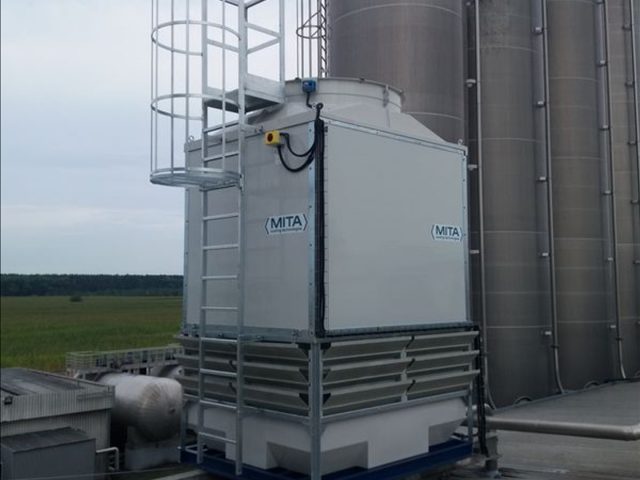
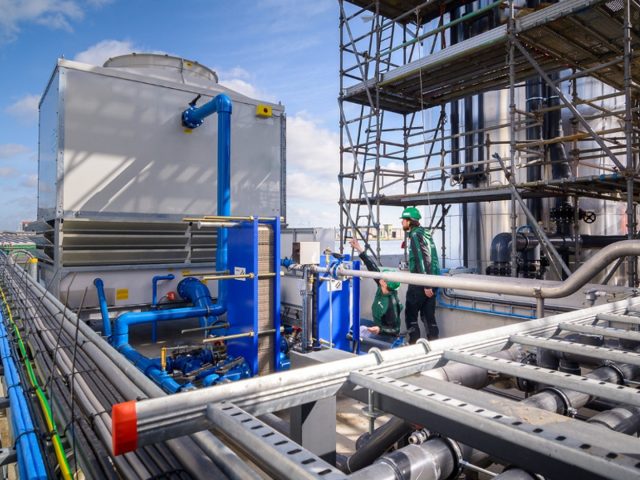
The solution: cooling towers and evaporative condensers
An evaporative cooler uses water to bring the temperature of the fluid close to the “wet bulb” temperature of the installation area.
Industrial Process Cooling: What to KnowHow does an evaporative cooling system work?
This category includes wet cooling towers and industrial refrigerant gas condensers.
The heat exchange can be direct (open circuit towers) or indirect (closed circuit evaporative towers, industrial condensers): the high performance and the possibility of managing the cooling process with maximum safety do not change.
How to ensure safety in evaporative cooling?
International third-party organisations such as Eurovent and the Cooling Technology Institute outline good practices for proper water management in cooling towers and evaporative condensers. You can also manage your plant efficiently and safely through integrated cooling systems:
- cooling plants to contain control equipment,
- control systems equipped with inverters to automate equipment operation,
- conditioner dosing and salinity control equipment.
Evaporative cooling has two allies
They are cooling technology 4.0 and noise protection innovations.
- With remote control platforms, you can have the performance of your evaporative cooler just a click away in your management system (Industry 4.0).
- In civil buildings, it has become necessary to keep the noise down: low-speed fans and sound-absorbing hoods are the simple and effective solution.
So, you can always count on highly efficient and environmentally friendly cooling towers and evaporative condensers.
Contact Us and Find All MITA TechnologiesDo you wish to have free advice?
Contact Us NowMITA Cooling Solutions
-
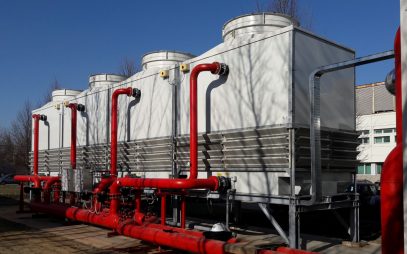 for medium to large systems
PME-E Open-Circuit Evaporative Cooling Tower
A light and non-corrodible open-circuit evaporative cooling tower: process industry and HVAC operators will be able to count on its multiple versions and ease of transport and installation.
-
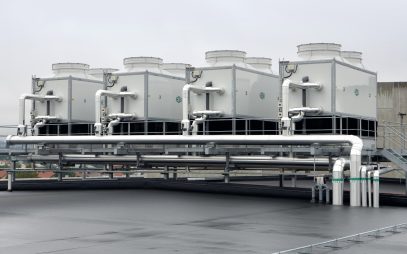 for plants of all sizes with fluids to be maintained
MCC Closed-Circuit Evaporative Cooling Tower
Some industries need to keep the chemical-physical characteristics of the process fluids unchanged: in these cases, MCC closed-circuit evaporative cooling tower joins the game. Possibility to work in free-cooling mode. MCC-EC version available with electronically controlled fans.
-
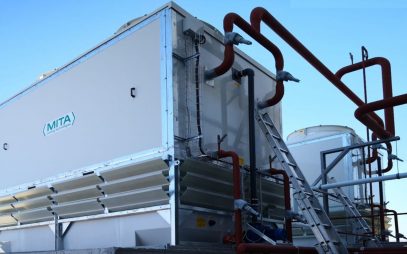 For condensing refrigerants (Ammonia NH3)
MCE Evaporative Condenser
Compact, efficient and easily accessible: MCE evaporative condenser ensures refrigeration operators all the operating standards of its own technology class. The typical MITA evaporative coolers’ durability over time is a plus. MCE-EC version available with electronically controlled fans.
Some MITA Projects

Fonderia Casati is Industry 4.0 also thanks to MITA Cooling Systems
Fonderia Casati, a historic company in Varese, has understood the importance of industrial process automation to maintain its competitiveness at the European level.
Learn More
Cooling Technologies for a High-Quality Food Process
More than a hundred years ago it was an apple orchard: now it is one of the most important food industries in Sweden. This is the company to which MITA Cooling Technologies and CAMPreq have provided solutions-as manufacturer and process cooling consultant, respectively.
Learn More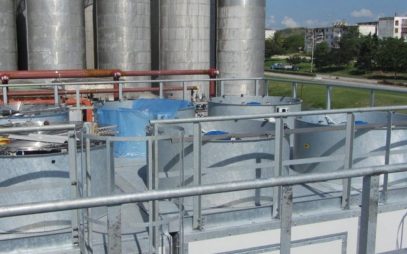
Evaporative Condensers for a Brewery in Cuba
A Cuban brewery, during 2015, needed to replace the ammonia (NH3) condensing system from the compressors of the refrigeration units: MITA Cooling Technologies was involved in the supply of evaporative condensers.
Learn MoreSee more technologies
Newsletter
Subscribe to MITA newsletter and stay updated on technical solutions for industrial and civil cooling and get to know our offer.